Earning a concealed carry permit in the Hudson Valley or Northern New Jersey is no longer a matter of simple administrative filing; it's a rigorous test of disciplined adherence to regulatory standards and technical proficiency. You likely recognize the weight of this responsibility, yet the prospect of a mandatory 18-hour curriculum can feel daunting when you're facing potential mental fatigue and the precision required for live-fire qualification. Implementing specific Tips for Black Sky Tactical success will help you transform this intensive process into a structured path toward certification.
We understand that the 16-hour classroom portion and the nuances of NYS and NJS legal mandates often cause significant anxiety for applicants. This article outlines expert preparation strategies to ensure you master the 18-hour curriculum while maintaining the focus needed for the range. You'll learn how to navigate the classroom environment, meet the live-fire standards for your NRA Basic Pistol certificate, and gain the legal knowledge required for your permit application.
Key Takeaways
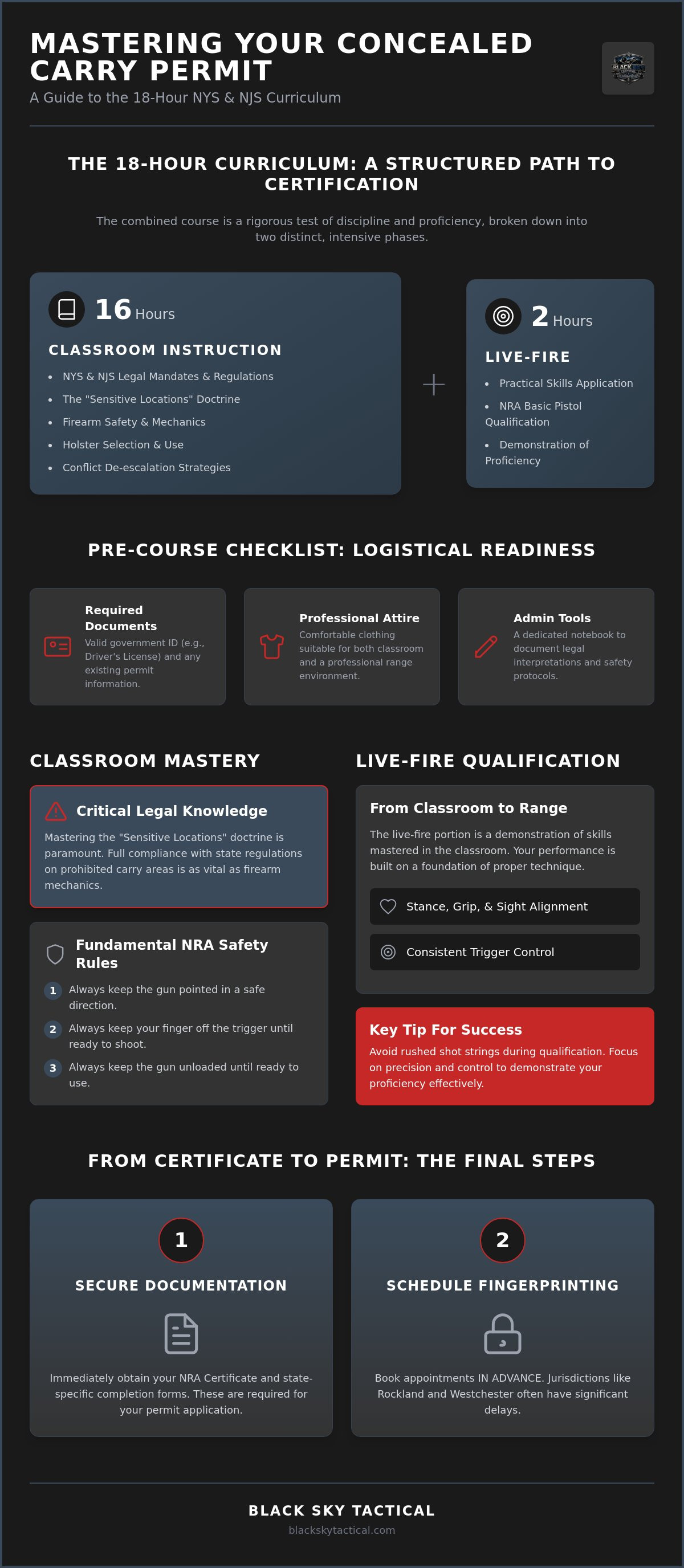
- Understand the 18-hour course structure, which consists of 16 hours of classroom instruction and two hours of live-fire training, to manage mental endurance and logistical readiness.
- Prioritize the mastery of the "Sensitive Locations" doctrine and legal mandates to ensure full compliance with New York and New Jersey state regulations.
- Apply technical Tips for Black Sky Tactical success during the range portion by maintaining consistent trigger control and avoiding rushed shot strings during the qualification.
- Secure both your NRA certificate and state-specific completion forms immediately following the course to facilitate a streamlined permit application process.
- Schedule required fingerprinting appointments in advance of course completion, as availability in jurisdictions like Rockland and Westchester is often subject to significant delays.
Preparing for the Combined NYS 18-Hour Conceal Carry + NRA Basic Pistol Class
The transition from a prospective applicant to a certified permit holder requires a high degree of mental and logistical preparation. The combined NYSNRA101 and NJSNRA101 courses are structured to meet specific state mandates, which involve a 16-hour classroom block followed by two hours of live-fire qualification. One of the most effective Tips for Black Sky Tactical success is to view these 18 hours as a professional briefing rather than a casual seminar. You'll need to maintain mental stamina throughout long instructional blocks, particularly when instructors detail the complexities of concealed carry laws in the U.S. and local administrative procedures. Proper hydration and active participation help you manage the instructional load while ensuring you absorb every technical and legal detail.
What to Bring to Your Training Session
Logistical readiness begins with documentation. You must present valid government identification and any jurisdiction-specific pre-course materials required by Rockland or Westchester authorities. One of the primary Tips for Black Sky Tactical success involves arriving with a complete understanding of the equipment requirements for the live-fire segment. You should confirm whether you'll use a provided firearm or your own legally possessed pistol for the NRA portion before the class begins.
- Required documentation: Bring your current driver's license and any existing permit information relevant to NYS or NJS residents.
- Professional attire: Wear comfortable clothing that allows for safe movement in both the classroom and a professional range environment.
- Administrative tools: A dedicated notebook is essential for documenting specific legal interpretations and safety protocols provided by the instructors.
Setting Expectations for the 18-Hour Duration
The NYS 18 hour concealed carry course syllabus is designed for maximum efficiency by merging state-specific requirements with the NRA Basic Pistol curriculum. This "Combined" format ensures that students don't have to navigate separate certification tracks, which streamlines the path to the permit application. The 16-hour classroom portion covers firearm safety, holster selection, and conflict de-escalation, while the final two hours focus on the practical application of these skills on the range. Understanding this breakdown allows you to pace your energy and focus effectively over the course of the training weekend.
Mastering the Classroom: Legal Knowledge and Safety Fundamentals
The 16-hour classroom portion serves as a comprehensive legal and technical briefing. Success in this environment requires a deep understanding of the "Sensitive Locations" doctrine, which strictly dictates where permit holders are prohibited from carrying. Mastering these boundaries is just as vital as firearm mechanics. One of the primary Tips for Black Sky Tactical success is maintaining a high level of engagement during these instructional blocks to ensure no detail regarding jurisdictional authority is missed. During the NRA certification segment, you'll focus on the three fundamental rules of firearm safety: always keeping the gun pointed in a safe direction, keeping your finger off the trigger until ready to shoot, and keeping the gun unloaded until ready for use.
The Importance of the NRA Basic Pistol Component
The NRA basic pistol shooting course provides the technical foundation necessary for the CCW permit. Before you step onto the range, you'll master stance, grip, and sight alignment in a controlled classroom environment. These fundamentals ensure that your live-fire qualification is a demonstration of skill rather than a learning experiment. Integrating these technical Tips for Black Sky Tactical success early in the curriculum will significantly reduce anxiety during the range portion.
Navigating NY and NJ Firearm Laws
Legal compliance varies significantly between jurisdictions. You must understand the administrative requirements for Rockland, Orange, and Westchester counties, as each has specific procedural nuances. The curriculum also addresses the legal distinctions between NYS and NJS carry permit qualifications, including the "duty to retreat" and state-mandated conflict de-escalation protocols. Understanding how to disclose your status to law enforcement during a traffic stop is another vital component of professional responsibility. If you're ready to begin this process, exploring our comprehensive training schedules will help you plan your path to compliance.
Strategies for the Live Fire Qualification
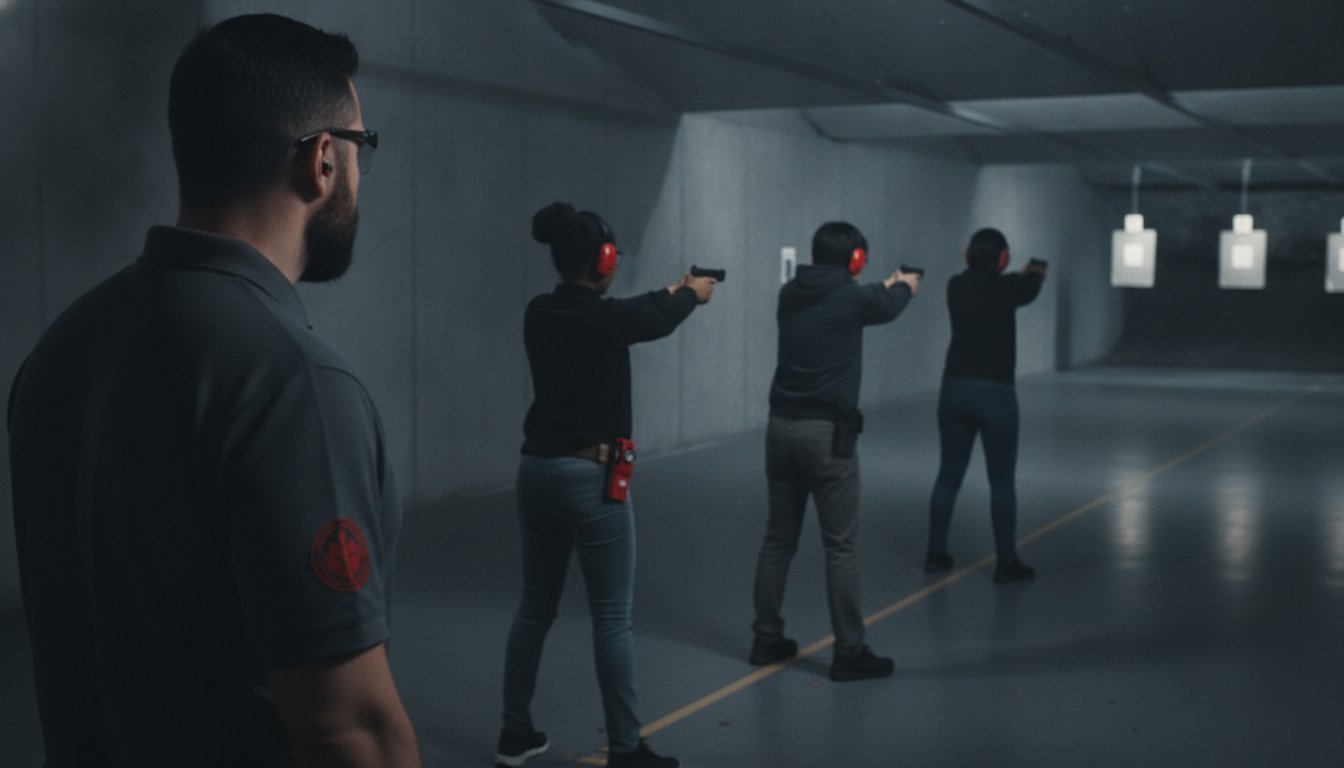
The two-hour live-fire component represents the practical culmination of your 18-hour curriculum. While the classroom provides the legal framework, the range demands a transition into disciplined physical execution. One of the essential Tips for Black Sky Tactical success is engaging in Private Firearm Training prior to your course date if you lack recent experience. This preparation allows you to refine your fundamentals in a low-pressure environment before meeting formal state standards. Integrating these Tips for Black Sky Tactical success into your range routine helps you maintain the calm assurance required for certification. Remember that accuracy is secondary to safety; a single safety violation results in an immediate disqualification regardless of your shooting proficiency.
You must familiarize yourself with the specific course of fire mandated by your jurisdiction. New York State requirements generally involve discharging rounds at a target from distances of 5, 7, and 15 yards. Most qualification failures don't result from a lack of talent but from poor trigger control or rushing the shot string. The qualification is a test of proficiency, not speed, so maintaining a steady cadence is vital for consistent groups. Listen to every instruction provided by the Range Safety Officer (RSO) to ensure you remain in compliance with all administrative and safety protocols.
The 5-Step Range Success Plan
- Step 1: Conduct a final dry-fire check of your grip and stance under instructor supervision to verify your mechanics.
- Step 2: Listen carefully to the Range Safety Officer commands. Procedural errors often occur when students anticipate a command rather than reacting to it.
- Step 3: Maintain a steady cadence. Focus on the front sight and ensure a smooth trigger press for every single shot.
Common Pitfalls During Live Fire
Anticipating recoil is the most frequent technical error. This often manifests as "low-left" hits for right-handed shooters as they push the muzzle down just before the shot breaks. Another critical area involves holster draws if they're included in your specific curriculum. Moving too quickly during the draw can lead to safety infractions or "muzzling" parts of your body. Slow, deliberate movements ensure that you remain in compliance with all range safety protocols while achieving the required passing score.
Post-Course Success: From Certificate to Permit
Completing the 18-hour curriculum marks the transition from a student to a permit applicant. This phase requires the same level of discipline you applied on the range to avoid administrative delays or application rejections. One of the most practical Tips for Black Sky Tactical success involves organizing your documentation immediately after the course ends. You must ensure you possess both your NRA certificate and the state-specific 18-hour completion form, as these serve as the primary evidence of your compliance with current mandates. Losing these documents can significantly delay your submission, as they're required for the formal background check process.
Scheduling your fingerprinting appointment should be your next priority. In counties like Rockland and Westchester, these appointments often book weeks or months in advance. Securing a slot early prevents unnecessary pauses in your application timeline. Simultaneously, you should begin gathering your required character references. This step is frequently the longest part of the process because it relies on the responsiveness of others. Choosing reliable individuals who meet the specific residency and relationship requirements of your county is vital for a smooth approval process.
Filing in Rockland, Orange, and Westchester Counties
Each jurisdiction maintains specific procedural nuances for application submission. For instance, the Rockland County Clerk’s office requires precise formatting for all submitted materials. Be aware that while the training provides the necessary certification, the final approval rests with the Licensing Officer, who is typically a county judge. This officer reviews your background check, mental health records, and character references to determine your suitability for a carry permit under the "good moral character" standard.
Ongoing Training and NRA Membership
Obtaining your permit is merely the beginning of your journey as a responsible firearm owner. Maintaining proficiency through Private Firearm Training ensures your skills remain sharp long after the initial qualification. Additionally, maintaining an NRA Membership provides access to ongoing legal updates and safety resources that are crucial for staying compliant with evolving laws. These are essential Tips for Black Sky Tactical success for those who wish to move beyond basic safety toward true defensive proficiency.
Advancing Toward Your Certification Goals
Mastering the rigorous 18-hour curriculum is a multi-stage process that demands disciplined mental focus in the classroom and technical precision on the range. You've learned how to manage instructional fatigue, navigate complex legal doctrines like "Sensitive Locations," and execute a stable shot string during your qualification. Applying these specific Tips for Black Sky Tactical success serves as a professional roadmap to ensure you meet the high standards required by state licensing officers. This preparation is essential for navigating the administrative nuances of the Hudson Valley and Northern New Jersey regions with confidence.
Our certified NRA instructors provide the necessary expertise to bridge the gap between complex state requirements and your personal safety objectives. We remain fully compliant with all NYS and NJS 2026 mandates; we prioritize clarity and accuracy in every instructional block. If you're ready to secure your certification through a streamlined, professional institution that understands the local requirements of Rockland and Bergen counties, Enroll in the NYSNRA101: Combined NYS 18-Hour Conceal Carry + NRA Basic Pistol Class today. We look forward to guiding you through this critical step in your permit application process.
Frequently Asked Questions
What happens if I fail the live fire qualification at Black Sky Tactical?
If a student does not meet the minimum proficiency standards during the live-fire segment, they must complete remedial instruction before a certificate is granted. This ensures that every individual who receives a Black Sky Tactical endorsement possesses the technical skills necessary for safe carry. The instructors will identify specific mechanical deficiencies, such as poor grip or trigger anticipation, and provide the guidance required to achieve a passing score during a subsequent attempt.
Is the 18-hour course required for a permit renewal in New York?
As of July 2026, the 18-hour training requirement is a mandatory component for initial concealed carry permit applications in New York State under the Concealed Carry Improvement Act. For existing permit holders, the law requires recertification every three years. While the full 18-hour course may not be required for every renewal, applicants should consult with their specific county licensing officer to determine if updated legal briefings or additional training are necessary to maintain their carry status.
Can I take the combined NYS and NJS course if I only live in one of those states?
Residents who only require a permit for one state may still enroll in the combined courses to enhance their legal and technical knowledge. The curriculum is designed to provide a thorough briefing on the administrative and legal nuances of both New York and New Jersey. Utilizing these combined Tips for Black Sky Tactical success allows students to understand the "Sensitive Locations" and "duty to retreat" standards across state lines, which is vital for regional compliance.
Do I need to own a handgun before taking the NRA Basic Pistol class?
Ownership of a firearm is not required to attend the NRA Basic Pistol portion of the curriculum. Because New York law prohibits the possession of a handgun without a valid permit, the course is structured to provide students with the necessary equipment for both the classroom and the range. This allows you to gain foundational skills and meet the state-mandated live-fire requirements before you are legally eligible to purchase your own firearm.
How long is the Black Sky Tactical certificate valid for the permit application?
The training certificate remains valid for your permit application, but most jurisdictions recommend submitting your paperwork within one year of course completion. County licensing officers in areas like Rockland and Westchester prioritize recent training to ensure that the applicant's knowledge of current legal mandates is up to date. Promptly organizing your paperwork and scheduling your fingerprinting are essential Tips for Black Sky Tactical success that prevent your certification from becoming stale during the administrative review.


