
Is your workplace safety plan a functional strategy or merely a collection of administrative paperwork that fails the moment a real crisis begins? For many organizations across New York and New Jersey, the pressure to meet the rigorous mandates of NYS Labor Law 27-b is often overshadowed by the genuine anxiety that a standard HR policy cannot stop a violent incident. It's a common concern that administrative compliance, while necessary for avoiding legal penalties and maintaining professional standards, does not always translate into the practical, tactical readiness required during an actual emergency.
This guide bridges that gap by providing a comprehensive roadmap for workplace violence prevention training NY that ensures full legal compliance for 2026 while equipping your leadership with the tactical command skills necessary to manage high-stakes threats. We'll examine the specific regulatory updates affecting your jurisdictional authority (including potential 2026 amendments), the critical distinction between passive awareness and active situational command, and the procedural steps required to build a resilient safety culture. By integrating professional Violent Incident Command Training into your standard protocols, you can move beyond simple certification and achieve a state of informed, disciplined preparedness.
Key Takeaways
- Master the updated regulatory requirements of NYS Labor Law Section 27-b to ensure your organization maintains full administrative compliance throughout 2026.
- Learn to distinguish between passive human resources policies and the active tactical command structures required to manage a violent incident effectively.
- Implement a comprehensive workplace violence prevention training NY program that integrates professional hazard assessments with specific jurisdictional protocols for the NY and NJ regions.
- Adopt the "First Five Minutes" rule to establish a clear command structure that prioritizes immediate staff safety and situational awareness during a crisis.
- Transition from basic safety awareness to advanced readiness by incorporating specialized Violent Incident Command Training into your professional development syllabus.
The 2026 Landscape of Workplace Violence Prevention in NY
The regulatory environment in New York has reached a critical juncture where administrative compliance and physical safety must converge. NYS Labor Law Section 27-b establishes the foundational requirements for public employers, yet its principles are increasingly viewed as the standard of care for the private sector as well. The New York State Department of Labor (NYSDOL) enforces these mandates with a focus on whether an employer has performed due diligence in identifying and mitigating foreseeable risks. As we move into 2026, the shift from passive documentation to active command structures is no longer optional. It's a necessary evolution driven by a more complex threat profile in metropolitan and suburban work environments alike.
Regulatory Mandates for NY Employers
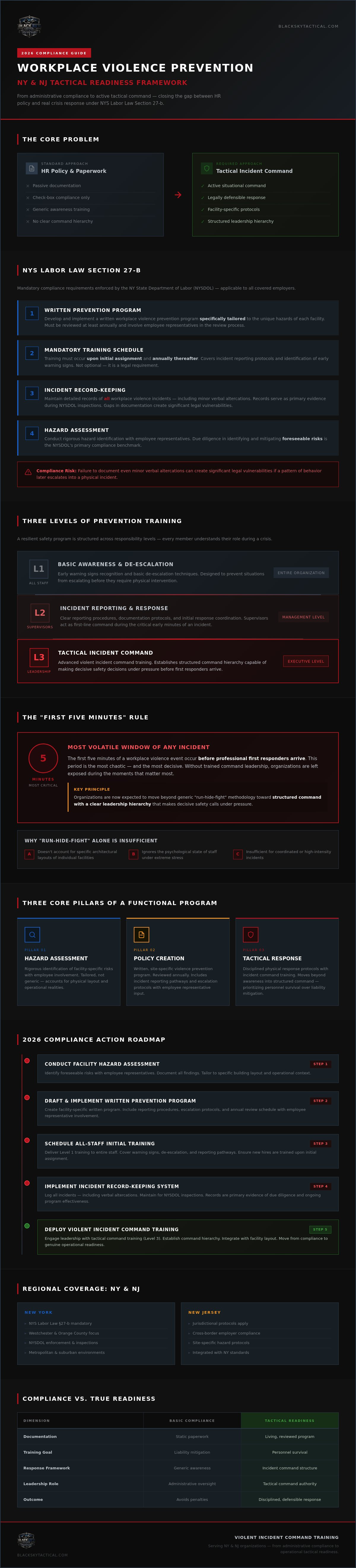
Compliance with state law requires a multi-layered administrative approach. Every covered employer must develop and implement a written workplace violence prevention program that is specifically tailored to the unique hazards of their facility. This program isn't a static document; it must be reviewed at least annually to ensure it remains relevant to current operational risks. This review process must involve employee representatives to ensure that those on the front lines are contributing to the hazard identification process.
Mandatory workplace violence prevention training NY represents the second critical pillar of compliance. This training must occur upon initial assignment and annually thereafter, providing employees with clear protocols for reporting incidents and identifying potential warning signs. Employers are also obligated to maintain detailed records of all workplace violence incidents. These records serve as the primary evidence of compliance during NYSDOL inspections and are essential for the ongoing evaluation of the program's effectiveness. Failure to document even minor verbal altercations can create significant legal vulnerabilities if a pattern of behavior later escalates into a physical incident.
The Evolution of Workplace Threats
The tactical reality of workplace safety in regions like Westchester and Orange County has changed significantly. For years, the "run-hide-fight" methodology served as the primary instructional framework for civilian response. While these basic actions remain relevant, they are often insufficient for managing the chaos of a coordinated or high-intensity incident. Generic advice doesn't account for the specific architectural layouts of a facility or the specific psychological state of staff under extreme stress.
The current shift toward comprehensive tactical management prioritizes the "First Five Minutes" of an event. This period is the most volatile and occurs before professional first responders arrive on the scene. Organizations are now expected to move beyond generic safety advice and toward structured command. This involves training staff in situational awareness and establishing a clear hierarchy of leadership that can make decisive safety calls under pressure. By integrating workplace violence prevention training NY with tactical command principles, businesses can ensure that their response is disciplined, predictable, and legally defensible.
What is Workplace Violence Prevention Training?
Workplace violence prevention training is a systematic approach to identifying, preventing, and managing workplace aggression through a combination of administrative controls and physical response protocols. It's not a singular event or a static presentation. Instead, it functions as a comprehensive framework that integrates three core pillars: rigorous hazard assessment, clear policy creation, and disciplined tactical response. While many organizations treat safety as a "check-the-box" compliance requirement, a functional program prioritizes the actual survival and safety of personnel over mere liability mitigation. This requires specialized instruction that moves beyond general awareness and into the realm of incident command.
The Three Levels of Prevention Training
A resilient safety program is structured across different levels of responsibility to ensure that every member of the organization understands their specific role during a crisis. Level 1 training focuses on the entire staff, emphasizing early warning signs and basic de-escalation techniques designed to prevent a situation from escalating into physical violence. Level 2 moves toward management protocols, where threat assessment teams are trained to evaluate reported behaviors and implement administrative interventions. Level 3 is reserved for leadership and security personnel, focusing on workplace violence prevention training NY that includes specialized command structures. This highest level of training ensures that those in charge can make rapid, high-stakes decisions when an incident is in progress.
Mandatory vs. Tactical Training
It's vital to distinguish between the curriculum mandated by the New York State Department of Labor and the advanced tactical skills necessary for real-world safety. State requirements often focus on the administrative "floor"—the minimum legal standards for written programs and reporting. However, tactical training provides the "ceiling" of protection, focusing on the physical and psychological realities of a violent encounter. Workplace Violence Prevention Training is an integrated system of legal compliance and tactical preparedness. Without this integration, a policy might satisfy an auditor but fail to protect an employee during a critical incident.
The foundation of every effective safety program is situational awareness. This is the ability to perceive, understand, and effectively respond to environmental cues before they manifest into a direct threat. By training staff to maintain a high level of awareness, organizations can often identify and mitigate risks long before a tactical response is required. For leadership teams looking to move beyond basic compliance, engaging in a professional Violent Incident Command Training program is the most effective way to establish a clear hierarchy of safety and response. This specialized instruction ensures that your workplace violence prevention training NY meets both the letter of the law and the practical needs of your staff in Rockland, Westchester, or Orange County.
HR Policy vs. Tactical Incident Command: Closing the Gap
Traditional human resources policies are often optimized for administrative dispute resolution rather than the physical management of a violent crisis. While these documents are essential for establishing behavioral standards and legal boundaries, they frequently fail during an active event because they lack a tactical execution component. Workplace violence prevention training NY must therefore evolve beyond the distribution of a handbook. It's necessary to focus on the "First Five Minutes" rule, which dictates that the outcome of a violent encounter is often determined by the actions taken before professional law enforcement arrives. Relying solely on a binder in a manager's office is a strategy that ignores the physiological realities of a high-stress environment.
The Limits of Written Safety Programs
Many organizations suffer from "paper safety," a condition where a robust written program creates a false sense of security while providing no practical guidance for staff under extreme stress. During a high-stakes incident, the human brain shifts into a physiological survival mode that significantly impairs complex decision-making and the ability to recall detailed administrative procedures. Transitioning from policy to tactical action requires a shift in mindset; it's not enough to have a plan on a shelf. The plan must be ingrained through repetitive, scenario-based instruction that prioritizes immediate, reflexive safety measures over bureaucratic reporting. Without this transition, the gap between what's written and what's executed can lead to catastrophic delays in response.
Implementing a Command Structure
Implementing a clear command structure is the most effective way to manage the chaos of a violent incident. By adapting the Incident Command System (ICS)—a framework typically utilized by emergency responders—for the corporate environment, businesses can establish a predictable hierarchy of leadership. This structure defines specific roles to ensure that responsibilities are distributed and decisions are centralized. A standard corporate command structure often includes:
- Incident Commander: The individual responsible for overall scene management and immediate safety decisions.
- Communications Officer: The person designated to coordinate with external emergency services and manage internal staff alerts.
- Safety Officer: A role focused on monitoring environmental hazards and ensuring that evacuation routes remain viable.
Integrating Violent Incident Command Training into your existing safety protocols provides the necessary bridge between administrative intent and tactical reality. For high-risk personnel or those in sensitive security roles, this training often serves as a professional foundation for advanced skills, including professional private firearms instruction in NY, which focuses on tactical proficiency in high-stakes environments.
Consider the difference between two organizations facing a similar threat. In a policy-heavy response, staff may hesitate while looking for guidance, leading to uncoordinated movement and increased vulnerability. Conversely, a command-heavy response utilizes a pre-established hierarchy to direct personnel to safety and initiate containment protocols immediately. This disciplined approach is the hallmark of a modern workplace violence prevention training NY program, ensuring that the organization is prepared for the tactical reality of 2026.
Implementing a Robust Prevention Program in NY and NJ
Implementation begins with a comprehensive hazard assessment that identifies specific physical and procedural vulnerabilities within the facility. This evaluation shouldn't be limited to entry points or lighting; it must include a detailed analysis of staff movements, high-traffic zones, and potential isolation areas where employees might be at higher risk. Once these risks are documented, the organization must develop a jurisdictional-specific written program that accounts for the unique operational realities of Rockland, Westchester, or Orange County. A generic template is insufficient for meeting the high standards of 2026 compliance. Instead, the program must include a clear communication chain that establishes how emergency information is disseminated to all employees simultaneously. Scheduling tiered training sessions is the next logical step, ensuring that each department receives instruction tailored to their specific risk profile and operational responsibilities.
Local Compliance in Rockland and Westchester Counties
In regions like Rockland and Westchester, coordination with local law enforcement is a critical component of an effective safety strategy. Understanding the specific response protocols and communication channels of regional authorities ensures that your internal command structure aligns with external emergency services. For personnel in specialized security roles who require a deeper level of tactical proficiency, completing NYS CCW permit training NYC provides a necessary foundation in firearm safety and legal standards. This level of preparation is essential for maintaining regional training standards among NY and NJ professionals who operate in high-stakes environments. Establishing these local links prevents the confusion that often arises when internal policies conflict with the jurisdictional authority of responding agencies.
The Audit and Review Process
Measuring the effectiveness of workplace violence prevention training NY requires more than a simple attendance log or a completion certificate. Organizations should utilize tabletop exercises to test their command structures under simulated stress, allowing leadership teams to identify gaps in communication or role clarity before a real incident occurs. As safety trends evolve throughout 2026, tactical protocols must be audited and updated to reflect new technological capabilities, changes in facility layout, or shifts in the regional threat environment. This methodical review process ensures that the safety plan remains a functional tool rather than a dormant document. To ensure your organization meets these rigorous standards, you should partner with Black Sky Tactical for a professional evaluation of your Violent Incident Command protocols.
Violent Incident Command Training by Black Sky Tactical
Achieving full compliance with 2026 safety standards requires more than the dissemination of a written policy; it necessitates a fundamental shift toward operational readiness. Black Sky Tactical provides specialized Violent Incident Command Training designed to bridge the gap between administrative requirements and the tactical realities of a violent encounter. This program is specifically engineered for professional environments in New York and New Jersey, ensuring that leadership teams possess a clear, disciplined command structure to manage a crisis effectively. By moving your organization toward a state of tactical readiness, you ensure that your workplace violence prevention training NY is not just a legal formality but a functional survival strategy.
Expert Instruction for High-Stakes Environments
The complexity of modern workplace threats demands a level of instruction that digital modules and automated presentations cannot provide. Instructor-led tactical training allows for real-time evaluation of a facility's unique layout and the specific psychological responses of the staff. This hands-on approach builds a culture of professional responsibility and heightened situational awareness, which are the primary defenses against escalating aggression. For many professionals, establishing a baseline of safety proficiency is an essential first step. Completing the NRA basic pistol shooting course provides a foundation in handgun safety and compliance that informs a broader understanding of tactical environments. This baseline ensures that those in high-stakes roles are prepared for the technical and legal requirements of their positions.
Customization is a central component of the Violent Incident Command program. Training protocols are adapted to the specific jurisdictional needs and architectural challenges of facilities in Rockland, Orange, and Bergen County. This localized focus ensures that internal safety plans are compatible with the response times and procedural expectations of regional law enforcement agencies. Rather than applying a generic safety template, Black Sky Tactical evaluates the specific operational flow of your business to develop a command structure that works under pressure. This meticulous attention to detail is what distinguishes a professional safety syllabus from a standard HR briefing.
Contact Black Sky Tactical for Professional Training
Preparing your team for the Violent Incident Command program begins with a thorough consultation to identify your organization's current safety gaps. During this process, we evaluate your existing written programs and reporting structures to ensure they meet the rigorous demands of NYS Labor Law 27-b and other relevant jurisdictional mandates. This evaluation serves as the roadmap for your staff's transition from passive awareness to active situational command. Establishing this hierarchy of leadership is the most effective way to protect your personnel and minimize organizational liability in the event of a crisis.
Don't wait for a critical incident to reveal the weaknesses in your current safety plan. Proactive preparation is the only reliable method for ensuring the safety of your staff and the continuity of your operations. You can Schedule your Workplace Violence Prevention Training today to begin the process of certifying your team in advanced incident command. By partnering with a disciplined expert in workplace violence prevention training NY, you can ensure that your facility is fully compliant, tactical, and prepared for the challenges of 2026.
Establishing a Standard of Tactical Readiness for 2026
Maintaining compliance with NYS Labor Law 27-b is a fundamental obligation for every organization, but true safety requires moving beyond administrative documentation. By integrating a clear incident command structure and prioritizing situational awareness, businesses can effectively bridge the gap between human resources policy and real-world tactical response. This disciplined approach ensures that your workplace violence prevention training NY is both legally sound and operationally effective during the critical first five minutes of an emergency. It's a critical adjustment for organizations where the stakes of an incident remain high.
Black Sky Tactical provides authoritative tactical instruction and specialized Violent Incident Command expertise to professionals throughout Rockland, Orange, Westchester, and Bergen Counties. Our programs are designed to transform your safety protocols from static documents into functional survival strategies that protect your staff and minimize organizational liability. You can Register for Violent Incident Command Training in NY today to ensure your facility meets the rigorous standards of the coming year. Taking these proactive steps demonstrates a commitment to professional responsibility and the long-term safety of your workforce.
Frequently Asked Questions
Is workplace violence prevention training mandatory for all NY employers?
Mandatory status in New York is governed primarily by Section 27-b of the Labor Law, which applies to public employers. While private sector businesses aren't currently under the same statutory mandate as public agencies, they're held to the OSHA General Duty Clause, which necessitates a safe working environment. Implementing workplace violence prevention training NY is the most effective method for private firms to demonstrate due diligence and mitigate the risk of significant civil liability.
What are the specific training requirements under NYS Labor Law 27-b?
Section 27-b requires a multi-faceted approach to organizational safety. Covered employers must develop a written program that outlines specific methods for hazard identification and incident reporting. This program must be created with the participation of employees or their representatives. Additionally, the mandate includes an obligation to perform a comprehensive risk evaluation of the physical workspace and provide documented training that addresses the specific hazards identified during that assessment.
How often do NY employees need to receive violence prevention training?
Employees must receive documented training at the time of their initial job assignment and at least annually thereafter. This recurring requirement ensures that staff members remain familiar with the organization's specific safety protocols and any updates to the written program. If significant changes are made to the facility's layout or the nature of its operations, supplemental training sessions may be necessary to maintain a state of continuous operational readiness and legal compliance.
Does NJ have similar workplace violence training mandates to NY?
New Jersey maintains its own set of regulatory standards, most notably the Violence Prevention in Health Care Facilities Act, which applies to specific medical and mental health environments. For other industries in Bergen County, the state relies on a combination of administrative guidelines and federal OSHA standards. Black Sky Tactical provides integrated instruction that accounts for the jurisdictional nuances of both New York and New Jersey, ensuring that regional businesses meet all applicable safety expectations.
What is the difference between standard safety training and Violent Incident Command?
Standard safety training typically focuses on basic awareness and the dissemination of administrative policies regarding prohibited conduct. In contrast, Violent Incident Command Training is a specialized tactical program that establishes a clear hierarchy of leadership during an active crisis. It prioritizes the "First Five Minutes" of an event, equipping managers with the decision-making skills required to direct personnel to safety and coordinate effectively with law enforcement before professional responders arrive.
Can Black Sky Tactical customize training for my specific county or industry?
Yes, Black Sky Tactical specializes in developing customized safety protocols for facilities in Rockland, Orange, Westchester, and Bergen Counties. We recognize that a manufacturing plant in Orange County faces different environmental risks than a corporate office in Westchester. Our instructors perform a localized hazard assessment to ensure that the workplace violence prevention training NY aligns with your specific industry requirements and the physical layout of your professional facility.
What happens if a NY business fails to comply with workplace safety mandates?
Failure to comply with NYS safety mandates can lead to substantial administrative penalties and inspections by the New York State Department of Labor. Beyond these immediate fines, an organization that lacks a documented prevention program faces significantly higher exposure to civil litigation if a violent incident occurs. A lack of training is often cited as evidence of negligence, which can result in catastrophic financial and reputational damage to the business and its leadership.
Does this training cover active shooter response protocols?
Active shooter response protocols are a core component of the Violent Incident Command framework. This instruction moves beyond the basic "run-hide-fight" model by teaching staff how to maintain situational awareness and execute a coordinated response under extreme physiological stress. We focus on establishing a disciplined command structure that allows for rapid evacuation or containment, ensuring that the organization can manage the technical and tactical challenges of a high-intensity violent encounter.


